Radical Acceptance: Letting Go of Self-Judgment
https://www.meetup.com/mental-health-utrecht/events/312151297/
1/8/20264 min read
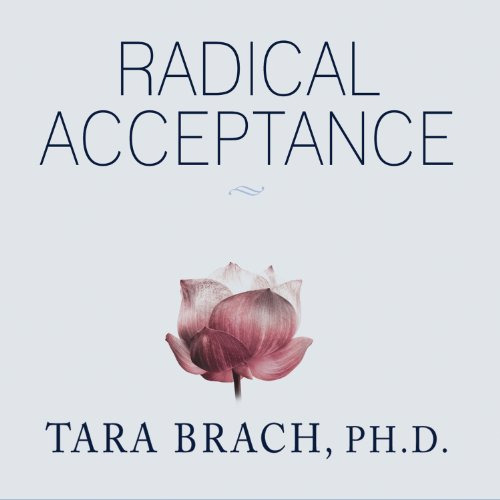
Radical Acceptance is a meditative practice wherein we acknowledge what we’re experiencing—positive or negative—and welcome it. It’s a powerful tool that allows us to be fully present in each passing moment. It helps us avoid getting stuck in our own heads. Tara Brach, a practising psychologist and devout Buddhist, discusses how we can use Radical Acceptance to live our lives more fully by always bringing our full attention to the present moment and accepting it for what it is.
In Radical Acceptance we’ll discuss:
How and why we get trapped in the stories we tell ourselves
How Radical Acceptance can help bring us out of that trance
Various ways of practicing Radical Acceptance in our lives and relationships
Feelings of Unworthiness
Many of us—perhaps even most of us—struggle with feelings of unworthiness. We never feel as if we’re good enough, smart enough, successful enough, or whatever the focus of our insecurity is.
In our attempts to become “better,” we constantly observe and judge ourselves. We’re always on the lookout for imperfections; and, when we inevitably find some, it just drives us deeper into our sense of inadequacy.
These feelings drive us to all kinds of self-destructive behavior, most notably addiction in all its various forms. Whether it’s to drugs, sex, work—an addiction that is, unfortunately, applauded by Western culture—or something else, addiction is often an attempt to escape the feelings of worthlessness.
Thoughts of unworthiness also create feelings of isolation. When we don’t think that we’re good enough, we assume that others think the same thing. We find it hard to trust people who offer us love, friendship, or even simple encouragement.
Letting Go of Perfection
The Zen master Seng-tsan said that to be free is to live without worrying about imperfection. Imperfections don’t mean that there’s something wrong with you, that you’re not worthy of love or respect—rather, they’re a natural and inescapable part of existence. Therefore, it’s much better to accept yourself, others, and life as they are, rather than chasing some impossible dream of how they should be.
By becoming so focused on ourselves, and chasing what we think we want, we cut ourselves off from the things that fulfill our greatest needs: those things that keep us connected to ourselves and each other.
Our greatest needs are met when we relate to one another, when we are fully present in every moment instead of worrying about the past or future, and when we accept and revel in the beauty—and the pain—that’s always around us.
Decenter yourself. Not everything that happens is a reflection of you or your perceived flaws. Whatever’s going on at any given moment, remember that it’s not about you; it just is what it is. That’s the key to Radical Acceptance.
Accepting Things as They Are
Breaking out of these unhealthy thoughts and coping mechanisms begins with accepting everything about ourselves, our lives, and our experiences. This means being aware of everything that’s happening inside our minds at bodies at every moment and embracing it. It means not shying away from sorrow or pain. It means recognizing our desires and dislikes without judging ourselves for them or feeling forced to act upon them. (However, Radical Acceptance does not mean accepting harmful behavior, either from ourselves or anyone else.)
Radical Acceptance goes against all of our conditioned reactions. Rather than embracing physical and emotional pain, we tend to resist it. We tense up our muscles and our minds. We start thinking about what could be causing the pain, how long it might last, what we can do to make it go away. Perhaps we blame ourselves for the pain, thinking that it’s a sign of our own shortcomings.
Even when things are going well, we start telling ourselves stories about how we don’t deserve the good fortune, when it might end, or how it’ll lead to more pain in the long run (like eating an ice cream cone while worrying about how many calories are in it).
By building up these narratives around our experiences, we distance ourselves from the experiences themselves. The narratives often devolve into harmful mantras about how we have to do more, do better, be better to make the pain stop. Even our good experiences are tainted with anxiety because we don’t simply accept them as they happen.
Two Aspects of Radical Acceptance
There are two key aspects of Radical Acceptance: recognition and compassion. The first part, recognition, is what Buddhists often call mindfulness. This is the practice of understanding what is happening to us physically, mentally, and emotionally, without being ruled by it.
For example, if we’re afraid, we might recognize that our minds are racing, our bodies are tense, and we feel compelled to run away. In doing this, we don’t try to change or manage the experience, we simply take it as-is. We can’t accept an experience until we clearly see what we’re accepting.
The second aspect, compassion, is responding with care and tenderness. Rather than judging ourselves harshly for what we feel or think, we honor the experience. However, that doesn’t mean that we indulge all of our desires. Rather, we acknowledge them and look upon them with tenderness and care.
Instead of berating ourselves for wanting a candy bar, for instance, we simply accept that at this point in time we feel the desire for a candy bar. That doesn’t mean we have to have one—though we could—we simply understand and accept our desire for what it is.
Both aspects are needed for Radical Acceptance. Either one on its own will create an unbalanced and harmful mindset.
Reference: https://www.shortform.com/summary/radical-acceptance-summary-tara-brach
Join our journey
© 2025. All rights reserved.